

Artificial Intelligence Is Rewriting the Rules at Société Générale S.A.
Société Générale S.A.
1864
Founded
117,000+
Employees
€26.8B
2024 Revenue
66
Countries
390+
AI Use Cases
1. About Société Générale
Société Générale S.A. is one of Europe’s largest and most storied financial institutions, headquartered in Paris, France. Founded in 1864, the group has grown into a diversified banking powerhouse serving over 25 million clients across 66 countries and employing more than 117,000 people worldwide. The bank operates across three core pillars: French Retail Banking, Global Banking and Investor Solutions (GBIS), and International Retail Banking, Mobility & Financial Services.
As the sixth-largest bank in Europe by assets, Société Générale manages one of the continent’s most complex, data-intensive operations — processing millions of transactions, risk assessments, compliance checks, and customer interactions each day. This scale makes it both a prime candidate for AI transformation and a bellwether for how traditional financial institutions can adapt in a technology-first era.
Category
Detail
Full Legal Name
Société Générale S.A.
Headquarters
La Défense, Paris, France
Founded
1864
CEO
Slawomir Krupa (since May 2023)
Employees
~117,000 worldwide
2024 Net Revenues
~EUR 26.8 billion
Q1 2025 Revenues
EUR 7.1 billion (+6.6% YoY)
Markets
66 countries across 5 continents
Listed On
Euronext Paris (ticker: GLE)
Core Businesses
Retail Banking · Investment Banking · Asset Management
2. The AI Landscape in Banking & Financial Services
The global banking industry is undergoing an AI-powered metamorphosis. Financial institutions, once bound by legacy infrastructure and conservative digital timelines, are now racing to deploy machine learning, generative AI, and intelligent automation at enterprise scale. The drivers are unambiguous: margin pressure, regulatory complexity, rising client expectations for real-time service, and the growing threat of nimble fintech competitors.
Global financial services AI market is projected to exceed $130 billion by 2028, with banks leading adoption across fraud prevention, credit scoring, customer service, and operations automation. European banks including Société Générale are at the forefront of this transition.
2.1 Where AI Is Making the Biggest Impact
• Fraud Detection & AML: Real-time transaction monitoring using ML models has reduced false positives by up to 60% at leading banks
• Credit Risk Scoring: AI-driven models assess creditworthiness with greater accuracy and speed than traditional methods, enabling faster loan approvals
• Customer Service Automation: Conversational AI handles millions of routine queries, freeing advisers for high-value interactions
• Regulatory Compliance: NLP-based tools parse regulatory documents and flag compliance risks automatically
• Market Trading & Analytics: AI-driven index products like the SG AI Navigator Index use NLP to evaluate earnings calls of 500 major US companies
• Back-Office Automation: Document processing, KYC onboarding, and reconciliation workflows are being heavily automated
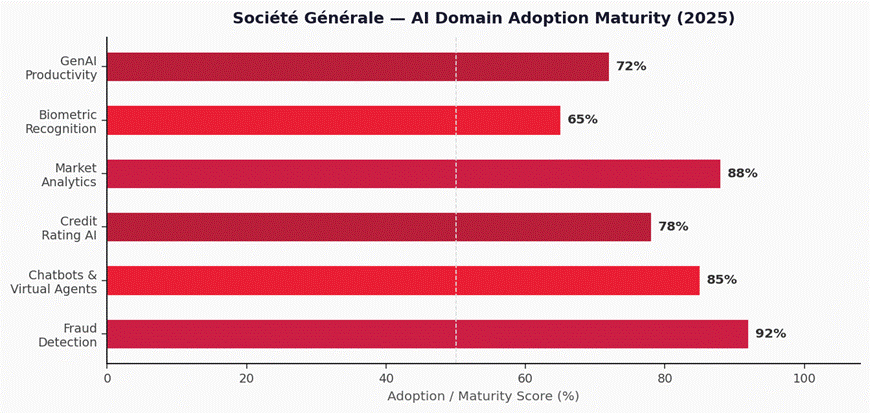
Figure 1: Société Générale AI Domain Adoption Maturity (2025 Estimate)
3. Société Générale and AI — A Deep Dive
Société Générale’s AI journey began well before the generative AI wave. The bank’s systematic, data-first philosophy has been evolving since 2017, when it launched a cloud-first infrastructure strategy that today underpins all digital and AI operations. By the end of 2020, over 80% of SocGen’s servers were cloud-based — a foundation that allowed AI workloads to scale rapidly.
3.1 SocGen AI — A Dedicated AI Entity
In early 2025, Société Générale made a landmark structural decision: the creation of SocGen AI, a new independent Group-level entity entirely dedicated to large-scale AI deployment. This unit — comprising approximately 60 dedicated employees and backed by a network of nearly 400 business-line employees — is led by Nicolas Meric, an entrepreneur with deep expertise in AI solution development.
“The creation of SocGen AI marks a major turning point. This new structure gives us real momentum to develop innovative solutions closely aligned with each business line.” — Société Générale, 2025
SocGen AI’s mandate spans six strategic domains, providing governance and technical coherence across the group’s AI ambitions:
• Client Interaction — omnichannel AI-driven communication and advisory
• Onboarding — automated KYC and account-opening processes for corporate and retail clients
• Back Office — intelligent document processing, reconciliation, and workflow automation
• IT Development — AI-enhanced coding tools that boost developer productivity
• Compliance — NLP-powered regulatory parsing and risk flagging
• Productivity — generative AI tools for summarisation, document drafting, and meeting analysis
3.2 Generative AI: From SoGPT to Microsoft Copilot
SocGen’s generative AI evolution offers a telling lesson in pragmatism. The bank invested in developing SoGPT, a proprietary internal AI assistant, which was rolled out to staff across business units. However, by late 2025, SocGen made the strategic decision to decommission SoGPT in favour of Microsoft Copilot — recognising that the pace of commercial AI development had outpaced the bank’s ability to maintain a competitive internal tool. This pivot underscores that for large institutions, curating the AI ecosystem is often more valuable than building it from scratch.
Key Insight: Société Générale’s decision to migrate from SoGPT to Microsoft Copilot reflects a broader industry truth — maintaining a proprietary LLM requires resources and speed that even Tier-1 banks find challenging. Partnering with leading platforms is increasingly the strategic norm.
3.3 Chatbots and Virtual Agents at Scale
Perhaps the most visible AI deployment at SocGen is in customer interaction. Two AI-powered chat and call systems — Eliott (deployed at BoursoBank) and Sobot (deployed for SG France) — collectively handle over 6 million interactions annually, operating 24/7 with instant, contextually relevant responses. BoursoBank, the group’s digital banking arm, added nearly 400,000 new customers in just one quarter in 2025, bringing its total customer base to approximately 8.3 million by September 2025 — a growth trajectory AI-powered service plays a central role in sustaining.
3.4 AI in Fraud Detection and Risk Management
Fraud prevention was among the first areas where SocGen deployed AI at production scale. The bank’s AI systems monitor transactions in real time, applying pattern recognition and behavioural analytics to flag suspicious activity far faster than human review teams. Biometric and facial recognition is also used across identity verification workflows. These capabilities are embedded into the bank’s compliance and onboarding infrastructure, reducing friction for legitimate customers while raising barriers for fraudulent activity.
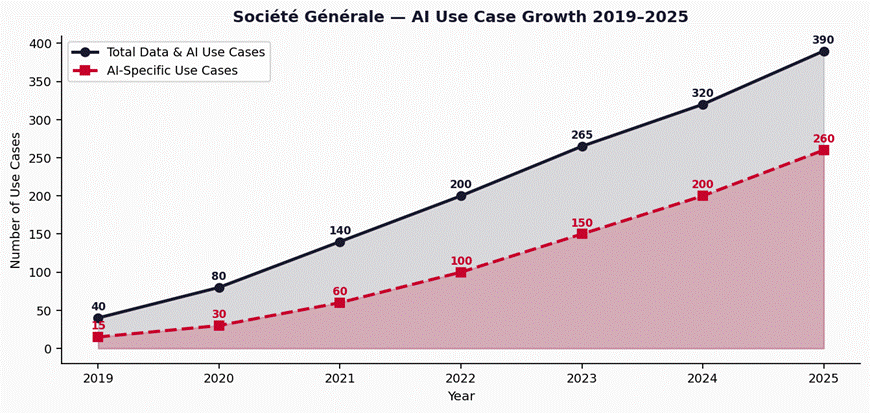
Figure 2: Société Générale AI Use Case Growth 2019–2025 (Estimated)
3.5 AI for Personalised Financial Advisory
Beyond automation, Société Générale is deploying AI to enhance the quality and relevance of client advice. AI models analyse a client’s life stage, financial history, and behavioural data to recommend appropriate products and services — shifting the adviser’s role from information delivery to strategic guidance. Rosbank (a former SocGen subsidiary) piloted Personetics, an AI personalisation platform, to deliver highly tailored financial insights to retail customers based on their transaction history and financial habits.
3.6 AI in Market Intelligence: The SG AI Navigator Index
In the investment domain, SocGen developed the SG AI Navigator Index — an AI-powered index tracking the 500 largest US companies. Its AI model uses Natural Language Processing to systematically evaluate earnings calls, extracting management sentiment and forward-looking signals. The index selects the top 20% of companies with the strongest perceived earnings outlook, adjusting equity exposure daily in response to market sentiment shifts — a real-world production AI product bridging the gap between language intelligence and investment decision-making.
4. Key AI Developments — 2025 & 2026
Date
Development
Impact
Feb 2025
Creation of SocGen AI — independent Group entity for AI industrialisation
High — structural commitment to scale AI
Q1 2025
BoursoBank adds ~400K customers in one quarter (8.3M total); AI-powered Eliott handles surge
High — AI enables digital bank growth
Jul 2025
French Government “Dare to Use AI” programme launched; SocGen aligned
Medium — regulatory/policy tailwind
Jul 2025
SocGen publishes AI pillars: GenAI assistants, unified omnichannel, employee knowledge AI
High — strategic clarity communicated
Late 2025
SoGPT decommissioned; SocGen migrates to Microsoft Copilot for staff productivity
Medium — pragmatic AI ecosystem decision
Jan 2026
Bloomberg reports SocGen’s pivot from internal AI to Copilot across workforce
Medium — industry signal on build vs buy
Feb 2026
SocGen reports record revenues and net income for FY2025; AI cited as efficiency driver
High — financial proof of AI ROI
5. Napplied — Transforming Recruitment Intelligence
Platform:
https://napplied.com
In an era where AI is rewiring every corner of financial services, one domain that remains critically underleveraged is talent acquisition. For institutions the size and complexity of Société Générale — operating across 66 countries with 117,000+ employees — recruitment is not a peripheral function. It is a core operational driver. Finding the right people, at the right speed, with the right relevancy signals, is a competitive advantage.
Napplied was built precisely for this moment. It is an AI-powered recruitment intelligence platform that brings precision, speed, and measurable outcomes to talent sourcing — without overwhelming HR teams with noise. Napplied’s architecture is purpose-built for organisations that receive moderate application volumes and need every interaction to count.
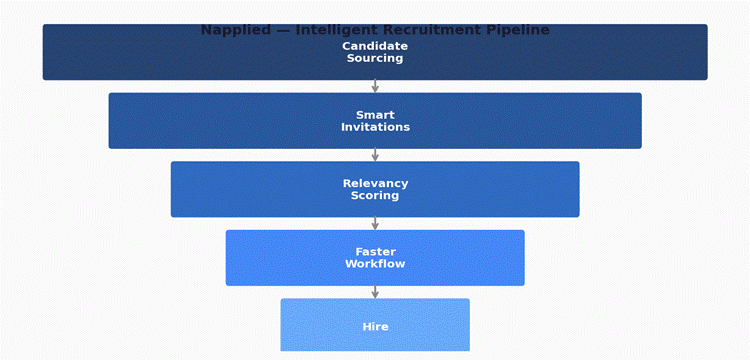
Figure 3: Napplied Intelligent Recruitment Pipeline
5.1 Candidate Sourcing — Finding the Signal in the Noise
Traditional recruitment at large banks involves wading through hundreds of applications per role, many of which are misaligned with requirements. Napplied’s candidate sourcing engine uses AI to intelligently identify and surface the right candidates before the pile-up begins. By analysing role requirements, candidate profiles, and historical hiring signals, Napplied matches intent with capability — not just keywords with job titles.
• AI-driven sourcing across multiple candidate pools and databases
• Contextual matching beyond keyword filtering — skills, experience pattern, and trajectory analysis
• Reduces time-to-longlist from days to hours for moderate-volume roles
• Enables proactive talent pipeline building before positions are even advertised
5.2 Smart Candidate Invitations — Personalised at Scale
Once high-potential candidates are identified, Napplied’s invitation workflow ensures that outreach is timely, personalised, and conversion-focused. Rather than generic bulk communications that candidates ignore, Napplied crafts contextually relevant invitations based on each candidate’s profile and the specific opportunity. This dramatically improves candidate response rates and creates a positive first impression of the employer brand.
• Automated personalised outreach tailored to each candidate’s background
• Multi-channel invitation flows — email, portal, and integration-ready
• Smart scheduling and follow-up logic to keep candidates engaged
• For organisations like Société Générale, this means high-calibre candidates receive experiences worthy of a Tier-1 institution from first contact
5.3 Relevancy Scoring — Cutting Through the Volume
For banks and financial institutions receiving moderate application volumes — typically ranging from dozens to a few hundred applications per role — the challenge is not finding candidates. It is knowing which candidates to prioritise. Napplied’s relevancy scoring engine analyses incoming applications against a multi-dimensional model of what “great” looks like for each role. The output is a ranked, explainable shortlist that HR teams can act on immediately.
Napplied’s relevancy scoring is not a black box. HR teams receive clear signals explaining why a candidate ranks highly — empowering confident, bias-aware hiring decisions rather than blind automation.
• Multi-dimensional scoring: technical fit, cultural indicators, career trajectory, communication quality
• Explainable AI output — recruiters understand the ranking rationale
• Reduces time-to-shortlist by up to 70% for moderate-volume roles
• Continuous learning loop — the model improves with each hiring outcome
5.4 Faster Workflow — Designed for HR Efficiency
Napplied’s value proposition crystallises in the workflow. Traditional recruitment at large financial institutions involves a constellation of manual steps: screening, logging, scheduling, feedback collation, compliance documentation, and candidate communication. Napplied automates and streamlines this entire chain, giving HR professionals more time for what they do best — human judgement, relationship building, and strategic advisory.
• Centralised candidate management dashboard with real-time status tracking
• Automated compliance and audit trails — essential for regulated industries like banking
• Integrated interview scheduling with smart calendar coordination
• Collaborative hiring — structured feedback loops between HR, hiring managers, and business units
• Data analytics on hiring pipeline health, diversity metrics, and time-to-hire benchmarks
Napplied Capability
Benefit for Société Générale HR
Outcome
AI Candidate Sourcing
Identifies best-fit candidates across 66 country operations
Faster, better-matched longlists
Smart Invitations
Personalised, professional candidate outreach at scale
Higher response & engagement rates
Relevancy Scoring
Instant prioritisation of moderate application volumes
Up to 70% faster shortlisting
Workflow Automation
Removes manual steps across the hiring pipeline
HR teams focus on strategic work
Compliance Trails
Audit-ready documentation for regulated banking recruitment
Reduced compliance risk
Analytics Dashboard
Real-time pipeline visibility and DEI metrics
Data-driven hiring decisions
5.5 Napplied for Job Seekers — A Two-Sided Intelligence
Napplied’s intelligence is not one-directional. Job seekers engaging with Napplied-powered processes benefit from a fundamentally better experience than traditional black-hole applications. Instead of submitting CVs and waiting in silence, candidates receive timely, relevant communication, clear process transparency, and personalised engagement that reflects the quality of the employer they are applying to.
• Faster responses — AI processes and routes applications without manual delay
• Fairer evaluation — relevancy scoring reduces unconscious bias in initial screening
• Better-matched opportunities — candidates are surfaced for roles genuinely aligned with their profile
• Professional candidate experience — from first contact through to decision
• Transparency — candidates know where they stand in the process
For an institution like Société Générale — whose employer brand is one of its most valuable assets in attracting top talent globally — Napplied ensures that every candidate interaction reflects the standard of excellence the bank stands for.
6. AI Outlook & Strategic Implications
Société Générale’s AI trajectory is clearly set: deeper industrialisation, expanded generative AI tooling, and increasingly autonomous workflows across client interaction, risk management, and operations. The creation of SocGen AI as a dedicated entity signals that AI is no longer a project — it is a permanent organisational capability.
For HR and talent acquisition — a function that historically has lagged in AI adoption relative to trading and risk — the opportunity is immense. As SocGen scales its AI workforce, the ability to source, score, and hire the right AI-literate talent rapidly will be a direct competitive differentiator. This is precisely where Napplied’s value is most acute.
Dimension
Current State (2025)
Direction
AI Use Cases in Production
~390+
Scaling to 500+ with SocGen AI industrialisation
Generative AI Tooling
Microsoft Copilot deployed group-wide
Deeper embedding in daily workflows
Client AI Interactions
6M+ annually via Eliott & Sobot
Expansion to full omnichannel orchestration
AI Hiring Needs
Growing demand for ML, GenAI, data roles
Critical — talent pipeline a strategic priority
HR Automation
Early-stage internal tools
Full recruitment intelligence platform opportunity
7. References & Data Sources
All data and information in this report has been sourced from publicly available materials. Links are provided below for verification and further reading.
Société Générale Official Sources
→ https://www.societegenerale.com/en/group/businesses-expertise/innovation-digital
→ https://adnews.galitt.com/en/articles/details/societe-generale-has-a-new-entity-dedicated-to-ai
External Research & Analysis
→ https://www.computerweekly.com/news/252509983/French-banking-giant-accelerates-data-and-AI-strategy
→ https://bankingfrontiers.com/socgen-170-use-cases-of-ai/
→ https://www.sbelitepartners.com/index/sg-ai-navigator-index
Napplied Platform
→ https://napplied.com